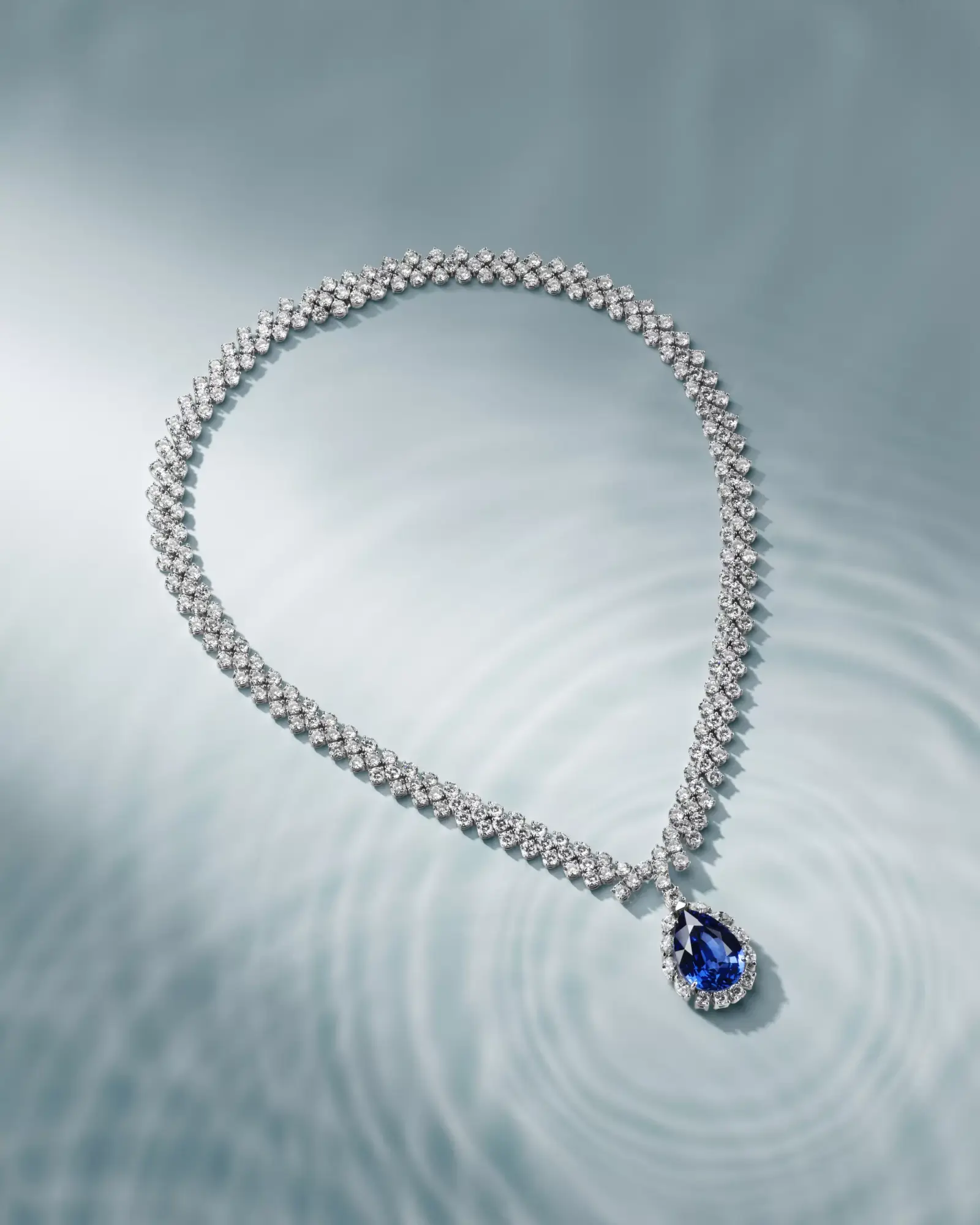
Sapphire and ruby are the same mineral: corundum. The only difference is in the trace elements. Iron and titanium make blue; chromium makes red. Both sit at 9 on the Mohs scale — after diamond, the hardest stones there are.
Origin is half the price
- Kashmir — a velvety blue of exemplary saturation; the mines are effectively finished and the stones now appear only at auction.
- Burma (Myanmar) — a deep blue with high brilliance.
- Ceylon (Sri Lanka) — a lighter, clearer blue; the most common origin for good sapphire on the market.
- Madagascar — quality ranges from good to excellent, at a more reasonable price.
Heated or natural?
Heating is an old and accepted way of improving colour and clarity, and around 95 per cent of the sapphire on the market has been heated. There is nothing wrong with it, provided it is declared. An unheated sapphire of comparable quality can cost several times as much, and it always comes with a laboratory report.
No honest jeweller minds the question: has this stone been heated?
Look at it in daylight
Shop lighting is usually warm and strong, and it shows a stone's colour better than it really is. Take a sapphire to a window and look at it in daylight. At Goharbin you can book an appointment to view pieces in daylight.